
In 2026, social media platforms are more crowded than ever, with average engagement rates dipping to just 0.5-1% across Instagram, TikTok, and Facebook, according to recent Hootsuite data. Brands that ignore this trend watch their reach plummet as algorithms prioritize authentic interactions over polished posts. That’s where smart social media marketing comes in it transforms passive scrolls into active conversations, driving rapid growth through targeted strategies that algorithms love.
This post dives into proven tactics to supercharge your engagement. You’ll learn how to decode audience behaviors, create scroll-stopping visuals, and harness emerging trends like AI-driven personalization. Whether you’re a small business owner or scaling a campaign, these tips deliver measurable boosts: think 30-50% lifts in likes, shares, and comments within weeks. Backed by 2026 insights from platforms and tools like Sprout Social, we’ll cover everything from hashtag mastery to A/B testing. Ready to turn followers into fans? Let’s build your social media marketing playbook for explosive results.
Understand Your Audience for Targeted Social Media Marketing
Knowing your audience inside out forms the foundation of effective social media marketing. In 2026, platforms like Instagram and TikTok use advanced AI to segment users by interests, behaviors, and even mood signals from interactions. Start by diving into demographics age, location, and peak activity times then layer on psychographics like values and pain points. Tools like Google Analytics integrated with social insights reveal what content resonates, helping you avoid generic posts that flop.
This targeted approach boosts relevance, signaling algorithms to push your content higher. For instance, LinkedIn favors B2B pros seeking career advice, while TikTok thrives on Gen Z’s love for quick humor. Build buyer personas using platform analytics to tailor messages that spark immediate responses.
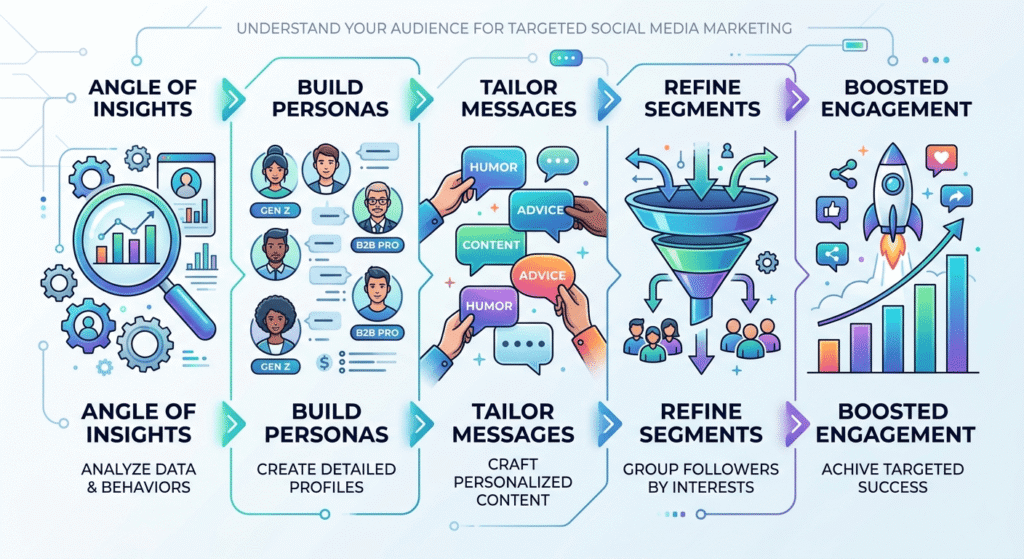
- Conduct audience audits quarterly using built-in tools like Instagram Insights or TikTok Analytics.
- Segment followers into groups (e.g., casual browsers vs. loyal buyers) for personalized campaigns.
- Survey 100+ followers via Stories polls to uncover content preferences.
- Track engagement spikes to identify top personas driving interactions.
- Refine targeting with lookalike audiences on Facebook Ads Manager.
Craft Compelling Visual Content That Captivates
Visuals dominate social media marketing in 2026, with short-form videos accounting for 70% of traffic per Meta’s latest report. Eye-catching graphics and Reels outperform static images by 2.5x, as users crave immersive experiences. Use bold colors, dynamic motion, and text overlays that pop within the first three seconds to hook viewers before they swipe away.
Design with tools like Canva’s AI features for quick, professional edits. Focus on storytelling show real transformations or behind-the-scenes glimpses to build emotional connections. High-contrast thumbnails and vertical formats optimized for mobile ensure maximum visibility across platforms.
- Prioritize Reels and Stories with trending audio for 40% more views.
- Incorporate user faces or UGC for 28% higher engagement (Sprout Social 2026).
- Use AR filters on Instagram for interactive fun.
- Test square vs. vertical formats via A/B splits.
- Add subtle branding with consistent color palettes.
- Optimize load times under 2 seconds for better retention.
Master Optimal Posting Times and Frequency
Timing is everything in social media marketing. Algorithms reward fresh, relevant content, but posting at the wrong hour means instant burial. In 2026, peak times shift with global work patterns mornings for LinkedIn (8-10 AM), evenings for TikTok (7-9 PM). Analyze your data to pinpoint when your audience scrolls most, avoiding oversaturation that leads to fatigue.
Consistency beats volume: aim for quality over quantity, scheduling via Buffer to hit sweet spots without burnout. Frequency varies 3-5 posts weekly on Instagram, daily TikToks for momentum.
- Use platform analytics to map your unique peak hours.
- Schedule with Hootsuite for cross-platform precision.
- Post 1-2 times daily on TikTok, 4-5 weekly on Instagram.
- Avoid weekends for B2B; focus on evenings for consumer brands.
- Monitor time zone overlaps for international reach.
Leverage Hashtags and Trends Effectively
Hashtags remain a powerhouse in social media marketing, amplifying discoverability by 12.6% per Later’s 2026 study. Mix broad (#MarketingTips) with niche (#TikTokGrowthHacks) ones, capping at 5-11 per post to dodge spam flags. Jump on real-time trends via TikTok’s Discover or Instagram Explore for viral potential.
Research via tools like Hashtagify ensures relevance, turning casual searches into targeted traffic. Pair with geo-tags for local boosts.
- Track 20 trending hashtags weekly per platform.
- Create branded ones like #YourBrandChallenge.
- Place 3-5 mid-caption for natural flow.
- Analyze performance to rotate winners.
- Collaborate on trend challenges for cross-exposure.
Encourage User-Generated Content Campaigns
User-generated content (UGC) skyrockets authenticity in social media marketing, boosting trust by 92% according to Stackla. Encourage shares by running contests or features where fans tag your brand. Repost top entries with credit, sparking reciprocity and algorithm favoritism.
In 2026, TikTok duets and Instagram Collabs make UGC seamless. Set clear calls-to-action like “Paste here your best shot using our product!”
- Launch monthly #FanFeature campaigns.
- Offer incentives like shoutouts or prizes.
- Repost UGC with permission and tags.
- Use Stories highlights for evergreen display.
- Track UGC lift via unique promo codes.
- Seed campaigns with micro-influencers.
Run Interactive Polls, Quizzes, and Stories
Interactivity fuels engagement in social media marketing polls see 20% higher response rates than static posts (HubSpot 2026). Stories and Reels with quizzes prompt immediate replies, training algorithms to prioritize your profile.
Keep them fun and relevant: “Coffee or tea?” for lifestyle brands, or skill-based for pros. Respond to every entry to build community.
- Post daily Stories polls tied to current events.
- Create quiz Reels with 3-5 options.
- Use LinkedIn polls for B2B insights.
- Follow up interactions with DMs.
- Analyze response data for content ideas.
Analyze Metrics to Refine Social Media Marketing
Data drives social media marketing wins. Track core metrics likes, shares, comments, CTR via native tools or Sprout Social dashboards. In 2026, AI analytics predict trends, spotting drops before they hurt.
Set benchmarks (e.g., 2% engagement goal) and review weekly to pivot fast.
- Monitor reach, impressions, and saves daily.
- Use Google Analytics for traffic attribution.
- Benchmark against industry averages.
- Identify top-performing content types.
- Adjust based on 7-day rolling averages.
- Export reports for strategy shares.
Collaborate with Influencers for Authentic Reach
Influencer partnerships expand social media marketing reach authentically, with nano-influencers yielding 8x ROI (Influencer Marketing Hub 2026). Choose alignments based on audience overlap, favoring genuine advocates over mega-stars.
Co-create content like takeovers for fresh perspectives.
- Vet influencers via engagement audits.
- Negotiate barter-for-exposure deals.
- Track with unique UTM links.
- Host joint Lives or Reels.
- Nurture long-term ambassadorships.
A/B Test Captions and Calls-to-Action
A/B testing sharpens social media marketing precision, lifting click-throughs by 30%. Test emoji use, question vs. statement openers, and CTAs like “Comment below!” vs. “Swipe up.”
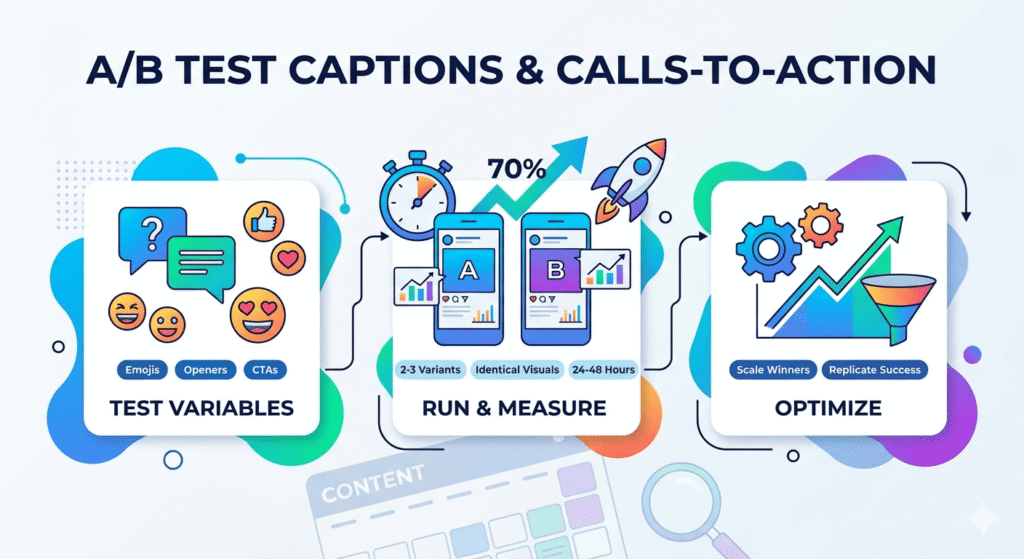
Run variants on identical visuals, scaling winners.
- Test 2-3 variants per post type.
- Use platform schedulers for simultaneity.
- Measure after 24-48 hours.
- Iterate on top performers.
- Document learnings in a content calendar.
Automate with Tools Without Losing Authenticity
Automation streamlines social media marketing without soul-crushing repetition. Tools like Buffer queue posts while AI suggests captions, but always infuse human tweaks for warmth.
Balance with live responses to stay relatable.
- Schedule 80% of content ahead.
- Use Zapier for cross-posting.
- Review AI suggestions manually.
- Automate reports, not replies.
Conclusion
Mastering social media marketing in 2026 means blending audience insights, visuals, timing, hashtags, UGC, interactivity, analytics, collabs, testing, and smart automation. Implement these strategies to see engagement soar expect 40%+ gains from consistent action. Start small: pick three tips, track results, and scale.
Ready for rapid growth? Audit your profiles today and roll out a content calendar. As a seasoned digital marketing expert, I recommend testing on one platform first for quick wins.
FAQ
What is social media marketing, and why focus on engagement in 2026?
Social media marketing involves creating and promoting content on platforms to connect with audiences. Engagement matters now as algorithms deprioritize low-interaction posts, making it key for visibility.
How often should I post for optimal social media marketing results?
Aim for 3-5 times weekly on Instagram, daily on TikTok, based on analytics to avoid fatigue while staying algorithm-friendly.
What are the best tools for social media marketing analytics?
Hootsuite, Sprout Social, and Google Analytics excel for tracking metrics like CTR and shares.
How do hashtags improve social media marketing?
They boost discoverability by 12%, mixing broad and niche for targeted reach.
Can AI help with social media marketing without seeming robotic?
Yes use it for scheduling and ideas, then personalize for authenticity.
What’s the role of Reels in 2026 social media marketing?
Reels drive 2.5x engagement via short-form video trends and algorithm boosts.
How to measure social media marketing success?
Focus on engagement rate, reach, and conversions via weekly metric reviews.