
In the fast-evolving world of search engines, conducting a thorough Complete SEO Audit Checklist Guide remains essential for any website aiming to dominate rankings in 2026. Google algorithms like Helpful Content Update and SpamBrain continuously prioritize sites that deliver value, speed, and relevance, making regular audits non-negotiable. This guide breaks down every critical step, from technical fixes to content optimization, empowering you to uncover hidden issues and boost visibility. Whether you’re managing a small business site or an e-commerce powerhouse, following this Complete SEO Audit Checklist Guide ensures alignment with Core Web Vitals, E-E-A-T principles, and emerging AI-driven search behaviors. Dive in to transform your SEO analysis into actionable wins that drive organic traffic.
Why Run a Complete SEO Audit Checklist Guide Regularly?
Search rankings fluctuate due to algorithm updates, competitor moves, and technical glitches, so a full SEO review demands periodic attention. Businesses ignoring this risk penalties from Google Search Console warnings or lost positions in SERPs. This Complete SEO Audit Checklist Guide highlights how timely audits maintain topical authority and user satisfaction.
Technical SEO Audit Essentials
Technical elements form the backbone of crawlability and indexation. Start here to ensure search engines access and understand your site fully.
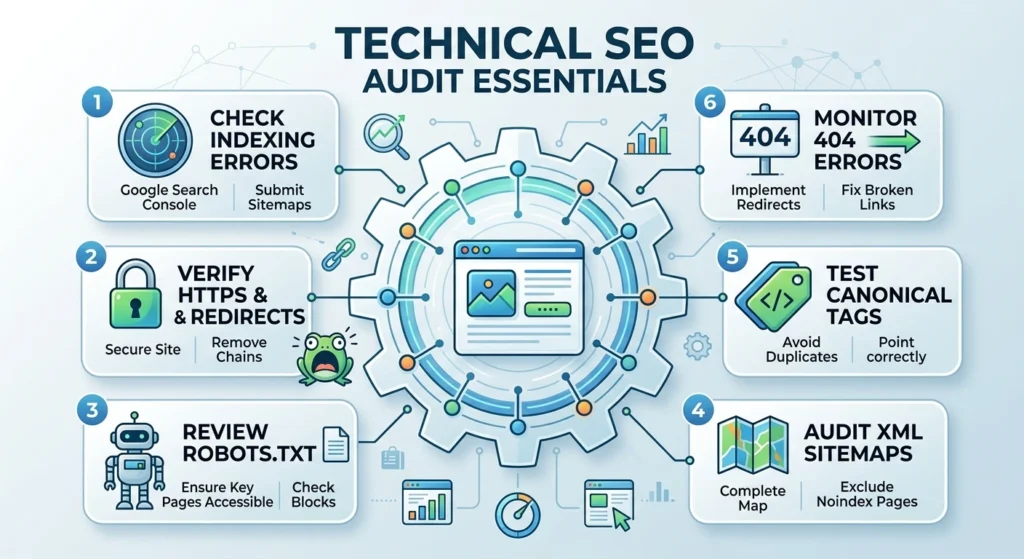
- Crawl Google Search Console for indexing errors and submit updated sitemaps.
- Verify HTTPS implementation and redirect chains using tools like Screaming Frog.
- Check robots.txt for unintended blocks on key pages.
- Audit XML sitemaps for completeness, excluding noindex pages.
- Test canonical tags to prevent duplicate content issues.
- Monitor 404 errors and implement custom redirects.
On-Page SEO Optimization Steps
On-page factors directly influence relevance signals. Optimize these to align with user intent and semantic search.
What elements define strong on-page performance in a Complete SEO Audit Checklist Guide? Focus on titles, meta descriptions, and headings that incorporate entities like branded terms and LSI keywords naturally.
Content Audit for Quality and Relevance
High-quality content drives engagement, but outdated or thin pages dilute authority. Evaluate depth, freshness, and alignment with search intent.
- Scan for orphan pages lacking internal links using Ahrefs Site Audit.
- Assess content length and comprehensiveness against top-ranking competitors.
- Identify keyword cannibalization where multiple pages target the same term.
- Refresh dated content with 2026 updates on topics like AI overviews.
- Measure readability scores via Hemingway App for scannable text.
This section demands a descriptive overview: Content audits reveal gaps in topical clusters, essential for building entity-based authority. Tools like SEMrush Content Analyzer flag low-performing assets, while manual reviews ensure E-E-A-T compliance. Prioritize user-focused revisions to enhance dwell time and reduce bounce rates.
Off-Page SEO and Backlink Profile Review
Backlinks signal trust, but toxic profiles harm rankings. Analyze quantity, quality, and diversity.
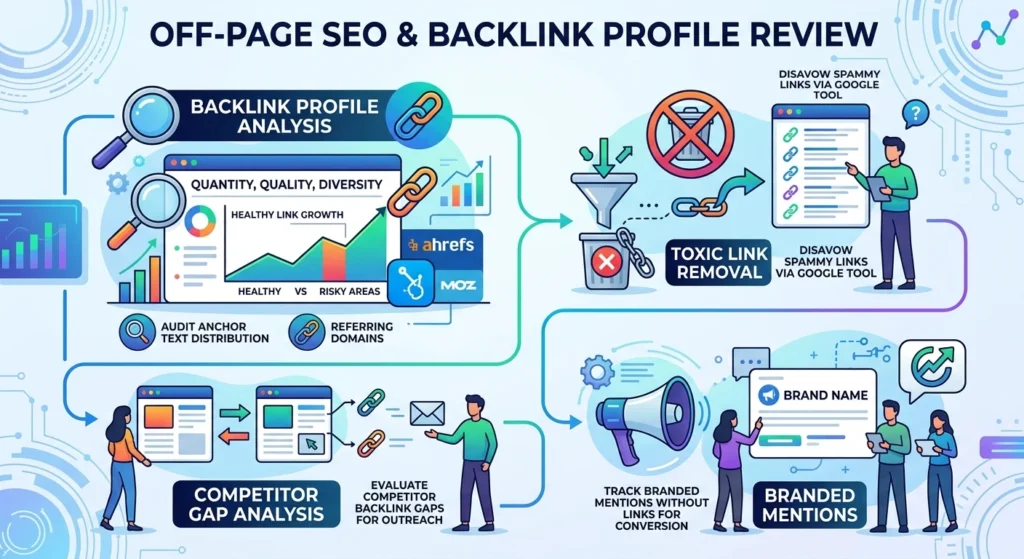
- Use Ahrefs or Moz to audit anchor text distribution and referring domains.
- Disavow spammy links via Google Disavow Tool after thorough vetting.
- Evaluate competitor backlink gaps for outreach opportunities.
- Track branded mentions without links for conversion potential.
Core Web Vitals Performance Check
Page experience metrics like Largest Contentful Paint (LCP), First Input Delay (FID), and Cumulative Layout Shift (CLS) now heavily impact rankings. Run tests across devices.
How do you measure Core Web Vitals in your Complete SEO Audit Checklist Guide? Leverage PageSpeed Insights for diagnostics and real-user data from Chrome User Experience Report.
- Optimize LCP by compressing images and leveraging browser caching.
- Reduce CLS with explicit CSS dimensions for media elements.
- Improve FID through code minification and third-party script deferral.
- Benchmark against 75th percentile thresholds for mobile and desktop.
- Implement lazy loading for below-the-fold resources.
- Monitor via Google Search Console’s Core Web Vitals report.
Mobile Usability and Responsiveness Audit
With mobile-first indexing standard, poor responsiveness tanks usability scores. Test comprehensively for 2026 standards.
Schema Markup and Structured Data Validation
Schema enhances rich snippets, improving click-through rates. Verify implementation across key pages.
- Use Google’s Rich Results Test to validate JSON-LD code.
- Add FAQ, Product, and HowTo schemas where relevant.
- Audit for errors in Google’s Structured Data Testing Tool.
- Expand local business schema with NAP consistency.
This requires detail: Schema markup bridges content to knowledge graphs, boosting AEO by answering queries directly in SERPs. Common pitfalls include mismatched types or missing required properties, which tools like Merkle Schema Markup Generator help resolve. Integrating it strengthens GEO for AI-generated responses.
Internal Linking and Site Architecture Analysis
A logical structure aids crawl budget and user navigation. Map silos for better flow.
- Audit link equity distribution with flow metrics in Ahrefs.
- Fix broken internal links using site crawlers.
- Implement breadcrumb navigation for deeper pages.
- Create content clusters around pillar pages.
Competitor SEO Benchmarking
Understanding rivals sharpens your strategy. Compare across key metrics.
What insights emerge from competitor analysis in a Complete SEO Audit Checklist Guide? It uncovers untapped keywords and superior tactics.
Local SEO Audit for Location-Based Visibility
For brick-and-mortar sites, NAP consistency and Google Business Profile optimization drive maps rankings.
- Verify GBP listings across directories like Yelp.
- Audit reviews for sentiment and response rates.
- Optimize location pages with geo-specific entities.
UX and Conversion Rate Optimization Review
SEO extends to user behavior. High bounce rates signal mismatches.
This area merits expansion: UX audits blend heatmaps from Hotjar with session recordings to pinpoint friction. Aligning design with accessibility standards, like WCAG, supports inclusive SEO while lifting conversions. Track metrics like pogo-sticking to refine experiences.
- Analyze scroll depth and exit pages in Google Analytics.
- A/B test CTAs and form placements.
- Ensure fast load times under 2.8 seconds for mobile.
Security and Speed Enhancements
HTTPS and performance prevent trust erosion. Prioritize these non-negotiables.
Tracking and Reporting Setup
Post-audit, establish monitoring for sustained success.
- Configure custom dashboards in Google Analytics 4.
- Configure rank tracking using SEMrush Position Tracking.
- Schedule monthly Complete SEO Audit Checklist Guide reviews.
In wrapping up this Complete SEO Audit Checklist Guide, consistent execution positions your site for long-term dominance amid 2026’s AI-enhanced search landscape. Implement these steps to unlock traffic growth and conversions. As a digital marketer, grab your tools today run the audit, apply fixes, and watch rankings climb. Ready to elevate your game?
Frequently Asked Questions
What steps does an SEO audit typically include?
An SEO audit covers technical fixes, content quality, backlinks, and performance metrics. Start with Google Search Console for errors, then evaluate on-page elements like titles and headings. Tools such as Ahrefs reveal off-page opportunities while PageSpeed Insights flags speed issues.
How often should you perform a site audit?
Run a full audit quarterly, with monthly checks for high-traffic sites. Algorithm updates like Helpful Content necessitate vigilance. Monitor rankings weekly via SEMrush to spot issues early.
Which tools are best for technical SEO checks?
Top picks include Screaming Frog for crawling, Google Search Console for indexing, and GTmetrix for Core Web Vitals. Ahrefs Site Audit handles comprehensive scans efficiently.
How do backlinks impact SEO audits?
Quality backlinks boost domain authority, but toxic ones trigger penalties. Audit profiles for relevance and diversity using Moz or Majestic. Disavow spammy links promptly.
Can schema markup improve audit results?
Yes, structured data enhances rich snippets and entity recognition. Validate with Google’s Rich Results Test to ensure FAQ, product, or review schemas display correctly in SERPs.